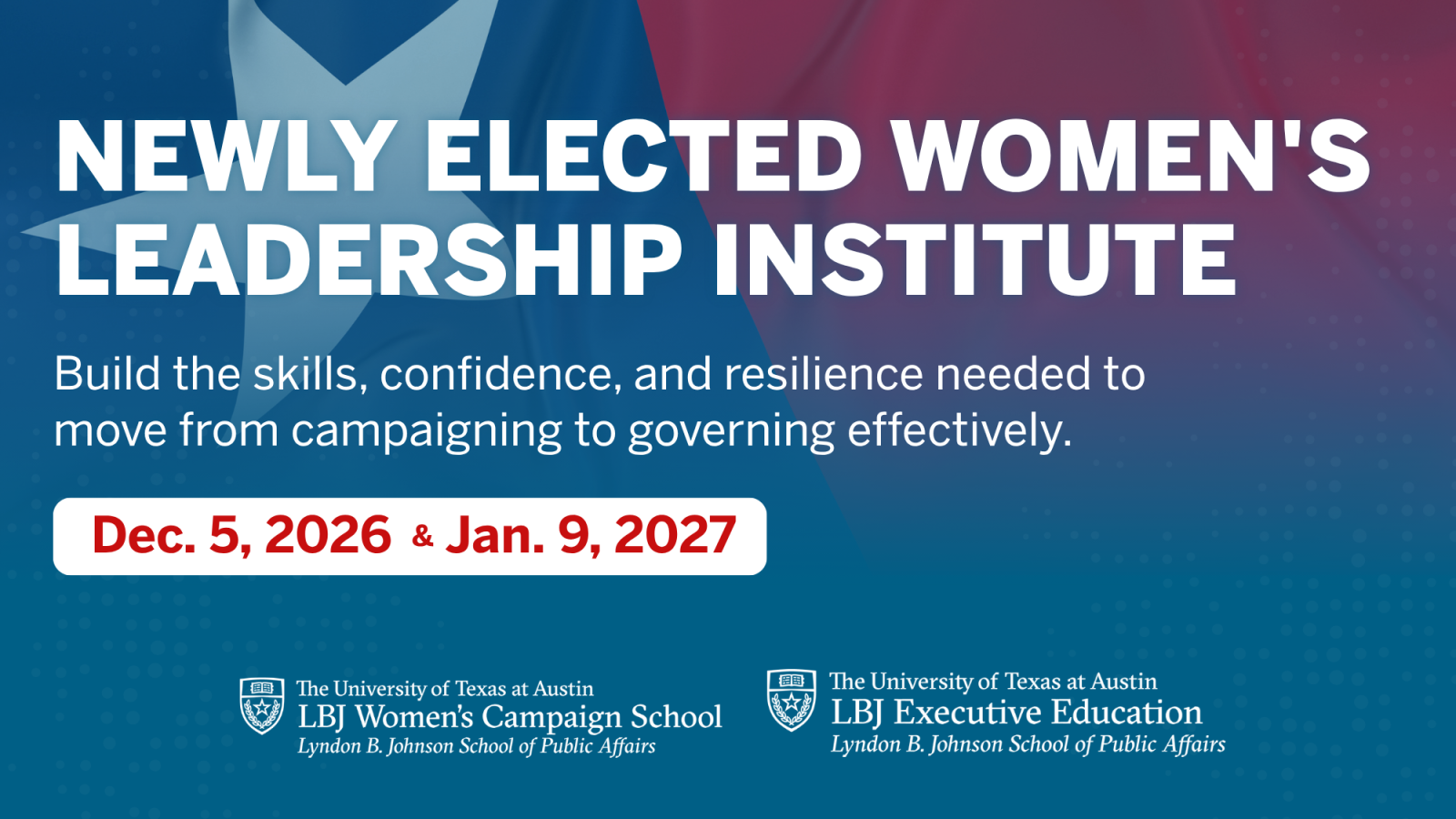
Newly Elected Women's Leadership Institute
Targeted Audience: Recently elected officials at every level of government. This includes city council members, mayors, school board members, county officials, special district trustees, and state and federal legislators.
Program Goal: Equip newly elected leaders with the practical leadership, governance, and resilience skills necessary to transition from campaigner to governing official while building confidence, authority, and long-term effectiveness in office.

All four sessions are designed to be taken together but can be taken as individual half-day sessions. This two day seminar takes place on Saturday, December 5, 2026 and Saturday, January 9, 2027.
Session 1: Leading a Diverse Team: From Candidate to Executive Leader
December 5, 9 AM – Noon
Learning Objectives:
- Differentiate leadership vs. campaigning behaviors in a governing role.
- Establish credibility and authority with experienced staff and subject-matter experts.
- Lead individuals with different motivations (career staff, political appointees, volunteers, and community members).
- Communicate expectations, priorities, and decision-making processes clearly.
- Manage conflict, disagreement, and resistance constructively.
- Create an inclusive and psychologically safe workplace culture.
- Building a team and handling transitions.
Key Topics:
- The shift from persuasion to responsibility
- Authority without authoritarianism
- First 90 days as an elected leader
- Leading people older or more experienced than you
- Working with a city manager/agency director/superintendent
- Setting norms: how decisions will be made
- Handling staff who supported your opponent
- Best practices in hiring and terminating employees
Engagement Activities
- Role Play: First meeting with department leadership
- Scenario Lab: Addressing a staff member publicly undermining a decision
- Exercise: Writing your leadership philosophy statement
Take Home Tools
- First 90-day Leadership Plan
- Difficult conversation Framework
- Meeting norms template
Session 2: Understanding Policy and Building Stakeholder and Legislative Relationships: How Things Actually Get Done in Government
December 5, 1 – 4 PM
Learning Objectives
- Understand how policy is developed, influenced, and implemented.
- Identify formal vs. informal centers of power.
- Map stakeholders and coalitions.
- Build productive relationships with legislative bodies and administrative staff.
- Work effectively with advocacy groups, media, and community organizations.
- Communicate positions without burning bridges.
Key Topics
- The lifecycle of a policy idea
- Who really influences decisions?
- Working with staff experts and analysts
- Intergovernmental relationships (state, county, city, boards)
- Relationship management vs. transactional politics
- Constituent expectations vs. policy realities
- Ethics and transparency considerations
Activities
- Stakeholder Mapping Exercise (real issue from participants’ communities)
- “Ask Me Anything” A frank conversation with former/current lobbyists/advocates on relationship building and policy decision making.
Take-Home Tools
- Stakeholder mapping worksheet
- Legislative meeting prep guide
- Communication positioning worksheet
Session 3: Budgeting: Reading the Document that Actually Runs Government
January 9, 8 AM – Noon
Learning Objectives
- Understand the structure and purpose of a public sector budget.
- Read and interpret key budget documents and financial reports.
- Identify how budgets reflect policy priorities and tradeoffs.
- Ask informed and strategic financial questions.
- Recognize warning signs of fiscal instability.
- Communicate budget decisions to the public clearly and responsibly.
Key Topics
- What a public budget actually is (policy, legal document, and political statement)
- Revenue sources (taxes, grants, bonds, fees)
- Mandatory vs. discretionary spending
- Capital vs. operating budgets
- Debt and long-term obligations
- Budget cycles and timing of influence
- Common misunderstandings about “cutting waste”
- How to explain budgets to constituents
Activities
- Hands-On Budget Lab: Participants analyze a simplified municipal budget
- Priorities Exercise: Balancing a budget shortfall
Take-Home Tools
- Budget reading checklist
- Key financial questions to ask staff
- Public explanation talking points template
Session 4: Being a Resilient Leader in Times of Crisis: Leading when Everything Goes Wrong
January 9, 1 – 4 PM
Learning Objectives
- Understand the stages of a public crisis and leadership responsibilities.
- Make decisions with incomplete information.
- Communicate effectively during emergencies.
- Navigate media, public criticism, and social media pressure.
- Maintain personal resilience and boundaries.
- Lead a community through recovery, not just response.
Key Topics
- What qualifies as a “public crisis”
- Crisis leadership vs. routine leadership
- Coordinating with emergency management and public safety
- Public communication and messaging
- Handling misinformation
- Managing public meetings during conflict
- Online harassment and safety considerations
- Emotional labor and burnout prevention
- Building a personal support system
Activities
- Crisis Simulation: Emergency event requiring rapid decisions and media response
- Press Conference Role-Play
Take-Home Tools
- Crisis communication checklist
- Media interview framework
Pricing
Three tiers for pricing – elected officials and participants.
Elected Officials - $200/session or $750 for all four sessions.
Women’s Campaign School and Governor’s Executive Development Program (GEDP) alumni (that are not elected officials) - $300/session or $1100 for all for sessions.
Participants (campaign managers, chiefs of staff and other legislative staff) - $350/session or $1300 for all four sessions.
All participants will receive an LBJ School Certificate of Completion and Digital Badge.