Extreme Weather Adaptation Lab News
Stay informed about our latest initiatives, research updates, and opportunities to connect. Explore upcoming events, workshops, and webinars focused on advancing resilience, policy innovation, and community collaboration in the face of extreme weather challenges.
Flood preparedness informed by community priorities
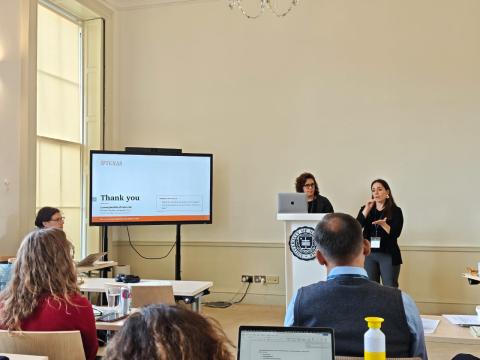
A team from EWAL presented ongoing research at a University of Notre Dame workshop on Peace and Sustainability, showcasing new approaches to measuring flood impacts that incorporate community-defined priorities. The work explored how these locally grounded measures can strengthen existing flood models and improve planning for extreme weather.
Artificial Intelligence and Sovereignty in planning for Extreme Weather Events
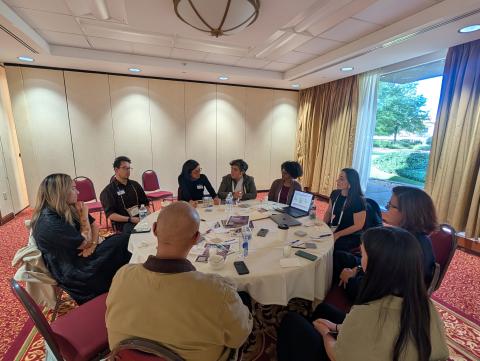
The Lab organized a workshop that convened scholars working at the intersection of Indigenous studies, planning, AI, and extreme weather for a knowledge-sharing session on emerging challenges and opportunities for advancing community-based AI sovereignty. The discussion focused particularly on Tribal technology sovereignty as new AI tools emerge that may strengthen—or undermine—preparedness for extreme weather.
Celebration of Student Research and Community Engagement Across Texas
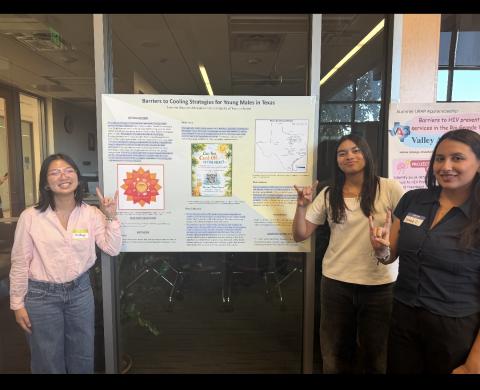
On October 23, undergraduate students at EWAL presented a research poster highlighting their contributions to the Lab’s work on identifying the enablers and barriers communities face in accessing cooling during prolonged heatwaves.
Water Planning Under Polycrisis. EWAL members participated in the 66th Annual Association of Collegiate Schools of Planning Conference
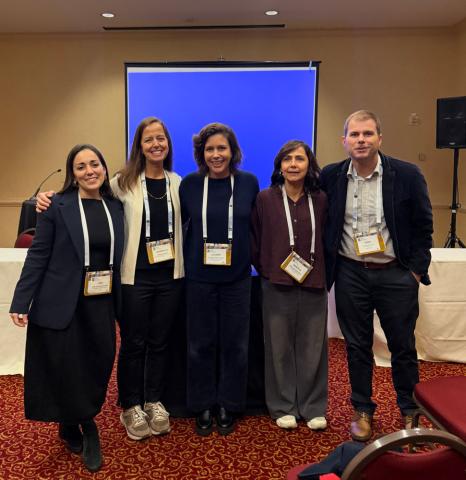
The panel examined how water planning can respond to overlapping pressures from climate change, infrastructure vulnerabilities, affordability, and environmental degradation. Drawing on cases from the United States, New Zealand, Colombia, and Brazil, it explored rights-based, justice-oriented approaches to water governance, with particular attention to strengthening resilience and preparedness for extreme weather.
Austrian Academy of Sciences Workshop
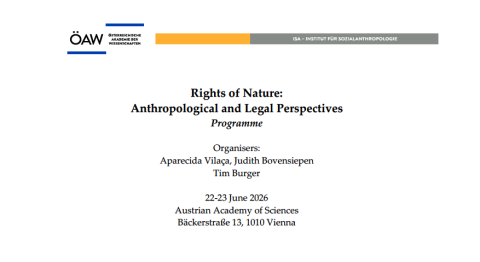
In June 2026 the lab participated in a workshop that brought together anthropological and legal perspectives on Rights of Nature, examining how these approaches reshape environmental governance, justice, and collective decision-making and how new governance frameworks can inform how communities manage environmental risk and respond to new challenges.
Govtech 4 Impact World Congress

From May 5th to May 7th the Extreme Weather Adaptation Lab participated in the Govtech 4 Impact World Congress that brings together governments and academics seeking to reimagine public service delivery and pioneer new and sustainable governance models.
LBJ School and School of Architecture Collaboration

On April 22nd students from the LBJ school and from the School of Architecture explored the latest extreme weather trends and the innovative strategies being developed across Texas to address them.
Transforming Texas with Improved Flood Risk Communication

On April 21st Professor Keri Stephens shared her latest research on Transforming Texas with Improved Flood Risk Communication.
Extreme Heat as Dynamic Impedance Presentation

On April 14th Do Yun Lee presented her research on “Extreme Heat as Dynamic Impedance: Thermally Conditioned Pedestrian Access to Public Transit.”
Speculations on the Prairie Archipelago: A Projective Atlas

On April 7th Professor Dean Almy, who will be speaking on his work on Speculations on the Prairie Archipelago: A Projective Atlas.
Urban Heat Mitigation and Hotspot Identification

On March 31st Trevor Brooks presented his work on Urban Heat Mitigation and Hotspot Identification.
Analysis of Public Datasets for Texas Environmental Programs
On March 24th Dr. Eva Noyola, a Data Analyst for the Texas CPA, spoke on the Analysis of Public Datasets for Texas Environmental Programs.
Climate Resiliency & Adaptation Manager

On March 10th Marc Coudert presented his insights as an expert and Climate Resiliency & Adaptation Manager with Austin Climate Action & Resilience.
The Viaduct Plan Presentation

On February 24th Sawyer McCarley presented his research on The Viaduct Plan: A Social and Built Analysis of the Impacts and Preparation of Hurricane Helene for Design Intervention.
Ecocentric Environmental Planning for Weather Extremes

On February 17th Professor Estrella Sanchez Corchero from University of the Basque Country visited the lab to talk about Ecocentric Environmental Planning for Weather Extremes and Integrating Ecological Economics, Biomimicry, and Rights of Nature into Urban Adaptation Policy.
AI driven causal inference tools

On February 10th Professor ChangHoon Hahn shared with the lab and PAL lunch participants his latest research on how AI driven causal inference tools can improve our understanding of flood mitigation effectiveness.
Rebuilding Trust and Improving Communications for Future Resilience

On February 2nd, the Extreme Weather Adaptation Lab participated in a panel titled "Rebuilding Trust and Improving Communications for Future Resilience" at the Texas Flood Organizing Group and Flood Inundation Mapping Third Annual In-Person Workshop, sharing insights on communication strategies and community-focused flood planning.
Transatlantic Forum for Nature and Environment (TAFNE)

On January 28th, the Extreme Weather Adaptation Lab participated in the second Transatlantic Forum for Nature and Environment workshop, focused on nature-based solutions for heat adaptation. The workshop brought together local and regional leaders from Germany and the United States to exchange lessons on how green and blue infrastructure can help communities respond to rising temperatures, heatwaves, and related public health and infrastructure challenges.
Policy and Planning for Adaptation Lunches (PAL)

The Extreme Weather Adaptation Lab is kickstarting its Policy and Planning for Adaptation Lunches (PAL). These discussions bring together academics, planners, and policy makers across disciplines to devise, discuss, and advance research on extreme weather adaptation.
Texas Flood Organizing Group Annual Workshop

The Extreme Weather Adaptation Lab will participate at the Texas Flood Organizing Group Annual Workshop, The Flood Organizing Group (FLOG) was formed in July 2021 to facilitate coordination between state and federal agencies on flood activities in Texas. The goal of the FLOG is to share information about flood projects in Texas, collaborate and coordinate flood activities. See for more details https://texasfloodorganizationgroup2026.splashthat.com/
Good Systems: Ethical AI at UT Austin

A project by Dr.Cano Pecharroman at the Extreme Weather Adaptation Lab is amongst the six projects selected after a Good Systems call for proposals to select interdisciplinary teams for research projects that mobilize human-AI partnerships. The project will delve into the use of new AI architectures to center community values and needs when measuring the effectiveness of flood preparedness.
Reimagining Urdaibai: A living lab for complex socioecological transitions

The Extreme Weather Adaptation Lab participated in an international seminar in Bilbao Spain titled Reimagining Urdaibai: A living lab for complex socioecological transitions.
The seminar sought to build collaboration between the academic and local stakeholders to enhance local understanding of the complex socioecological transitions that the region is experiencing, including communities’ resilience and preparedness. See more details at https://www.agirrecenter.eus/en/work/seminar-community-listening-at-the-service-of-socioecological-transition-processes.html
New research uses AI tools to identify climate vulnerability indicators

The lab released new research capitalizing on AI tools to better understand vulnerability to flooding, heat, and other extreme weather events in cities across the globe. The findings identified previously unknown factors that lead to exposure and shows that these factors can vary greatly across cities and hazards. See full article here https://www.frontiersin.org/journals/climate/articles/10.3389/fclim.2025.1521507/full