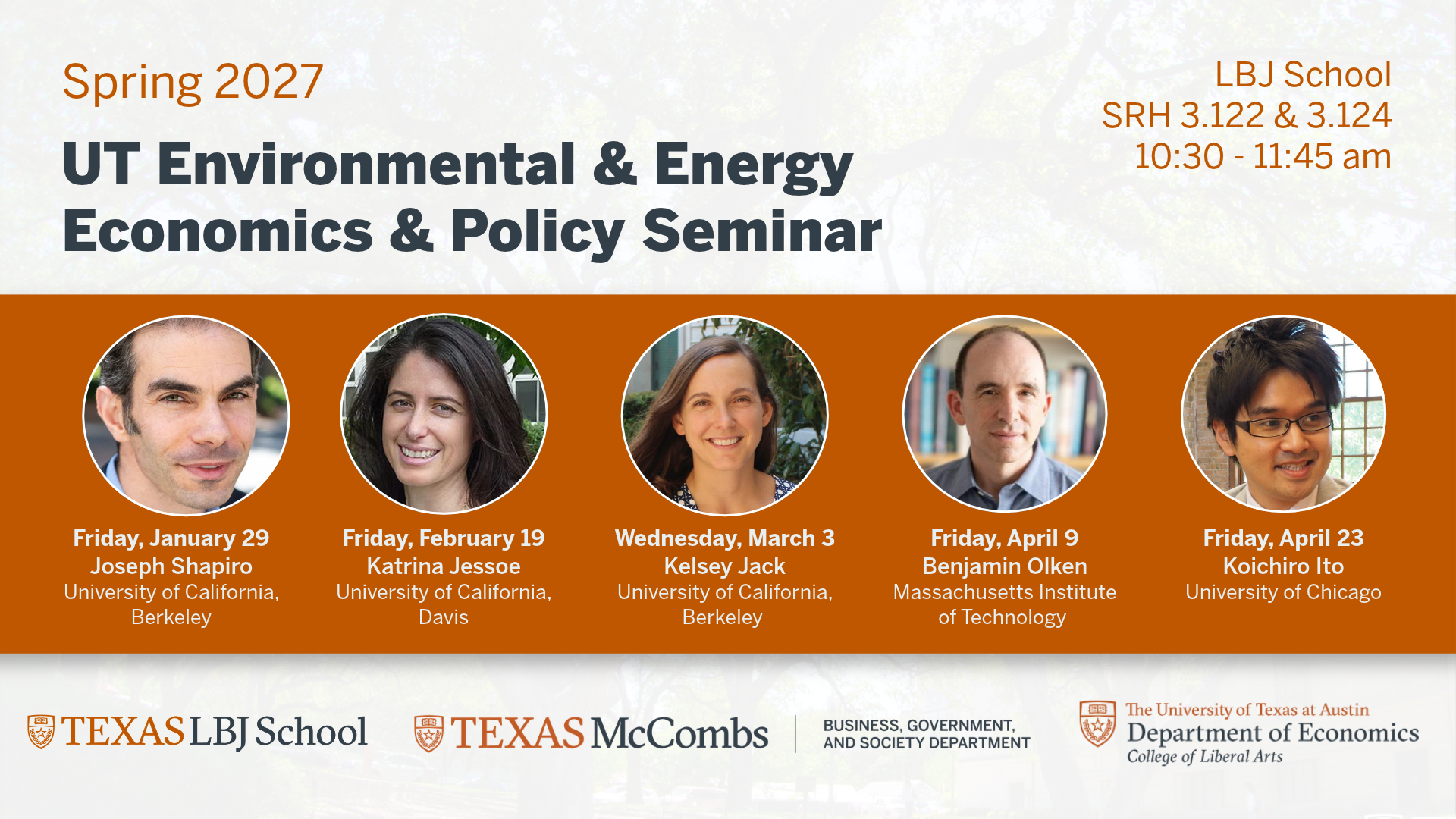
The LBJ School of Public Affairs, UT Economics, and the McCombs Department of Business, Government, and Society will continue our Environmental Economics research series for the Spring 2027 semester. Come hear from academics and subject matter experts in the field, including:
- January 29: Joseph Shapiro, Agricultural & Resource Economics and the Department of Economics, University of California, Berkeley
- February 19: Katrina Jessoe, Department of Agricultural and Resource Economics, University of California, Davis
- March 3: Kelsey Jack, Business and Public Policy group at the Haas School of Business, University of California, Berkeley
- April 9: Benjamin Olken, Department of Economics, Political Economics, Public Economics, Environmental Economics, Massachusetts Institute of Technology
- April 23: Koichiro Ito, Harris School of Public Policy, University of Chicago
About the Speakers
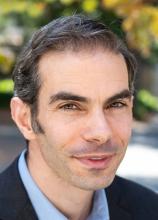
Joseph Shapiro is Chancellor’s Associate Professor at the University of California, Berkeley, in Agricultural & Resource Economics and the Department of Economics. He also serves as a Research Associate at the National Bureau of Economic Research and the Energy Institute at Haas. In addition, he has served as Associate Editor of the Journal of Political Economy and Quarterly Journal of Economics and Co-Editor of the Journal of Public Economics. His research studies two general questions: (1) How do globalization and the environment interact, including through trade, foreign investment, and international environmental and energy policy? (2) What have been the effectiveness, efficiency, and equity of environmental and energy policies over the last half century? He studies climate change, air pollution, clean energy, renewable and exhaustible natural resources, and especially water pollution. His work has links to the economics of international trade, public finance, and health. Shapiro is the inventor of a machine learning technology which has a patent pending and is under license to help firms comply with Clean Water Act regulation. He has received an Alfred P. Sloan Research Fellowship, Kiel Institute Excellence in Global Affairs Award, and Marshall Scholarship. Shapiro holds a Ph.D. in economics from MIT, Masters degrees from Oxford and LSE, and a BA from Stanford.
Katrina Jessoe is an associate professor in the Department of Agricultural and Resource Economics at UC Davis, where I specialize in environmental, resource and energy economics. Much of my research centers on the design and evaluation of pricing and conservation polices in the water and electricity sectors. In my research, I often collaborate with electric and water utilities, as well as state agencies. Some recent and ongoing projects include a framed field experiment to understand the water and energy impacts of water conservation instruments, the estimation of the price elasticity of demand for agricultural groundwater and land use, the design of water markets, the impacts of environmental change on externalities in common pool resources, and the effects of time variant electricity pricing in the agricultural sector. I am a co-editor for the Journal of the Association of Environmental and Resource Economists and serve on the Board of the Association of Environmental and Resource Economists. I received a BA from Princeton University in 2002 and a PhD in Environmental and Resource Economics from Yale University in 2009.
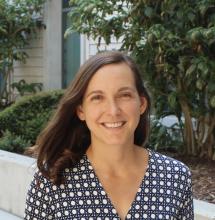
Kelsey Jack is the Sheth Sustainable Business Chancellor’s Chair, and an associate professor in the Business and Public Policy group at the Haas School of Business, UC Berkeley. Her research lies at the intersection of environmental and development economics, with a focus on how individuals, households, and communities decide to use natural resources and provide public goods. Much of Jack’s research uses field experiments to test theory and new policy innovations. She has done research in numerous countries in Africa, Asia, and Latin America, and has ongoing work in South Africa, Ghana, Malawi and Niger. She co-chairs the Environment and Energy sector at the Abdul Latif Jameel Poverty Action Lab at MIT (J-PAL), and is an associate editor at the American Economic Review and Econometrica. Jack has held past appointments at UC Santa Barbara and Tufts University, and also completed a postdoc position at MIT, with the Agricultural Technology Adoption Initiative (ATAI) at J-PAL. She holds a bachelor’s degree in Public and International Affairs from Princeton University and a PhD in Public Policy from Harvard University. Before graduate school, she spent two years in Lao PDR working for IUCN.
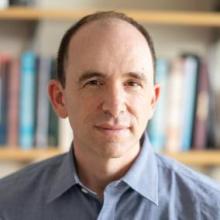
Benjamin Olken is the TEPCO Professor of Economics at MIT. His research focuses on development economics, with a particular interest in improving the performance of the public sector in developing countries, including social protection programs, taxation, and quality of governance. He also works on environmental challenges in developing countries, including the economic impacts of climate change and the drivers of tropical deforestation. He is a faculty Director of J-PAL, the Abdul Latif Jameel Poverty Action Lab at MIT, Co-Scientific Director of J-PAL's Southeast Asia office, and Co-Chair of the J-PAL's Social Protection Initiative. He is co-Director of the National Bureau of Economic Research (NBER) Development Economics Program. Olken received his BA summa cum laude as a double-major in Mathematics and Ethics, Politics, and Economics from Yale University in 1997, and his Ph.D. in Economics from Harvard University in 2004. Prior to joining MIT, he was a Junior Fellow at the Harvard Society of Fellows. In 1997-1998 he was a Henry Luce Scholar, living in Jakarta, Indonesia.
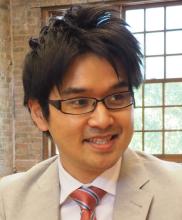
Koichiro Ito is a Professor of Business and Public Policy and Economics at UC Berkeley. His research explores the social costs of environmental externalities, such as air pollution, and how regulations to limit these externalities contribute to gains and/or losses to the economy. He is the faculty co-director of the UC Berkeley Opportunity Lab’s Climate and Environment Initiative. He is also a Research Associate at the Energy Institute at Berkeley, a faculty research fellow at the National Bureau of Economic Research, and a research fellow at IZA. He received his PhD in economics from Columbia University.